The Quiet Power of Remote Work
A short reflection on how remote work reshapes focus, creativity, and the way we think about productivity.
2 min read
A short reflection on how remote work reshapes focus, creativity, and the way we think about productivity.
A short reflection on how remote work reshapes focus, creativity, and the way we think about productivity.
There is a particular kind of quiet that settles in around 9am when you work from home. No commute, no background chatter, just the sound of coffee brewing and whatever problem you left half-solved the night before.
It took me about six months to stop feeling guilty about it.
Offices give you a transition. The commute — even a short one — is a bridge between home-brain and work-brain. Without it, mornings can blur. You eat breakfast and suddenly you are already behind on a pull request.
What helps is building a fake transition. A short walk, a specific playlist, a cup of tea you only make on work mornings. The ritual does not need to make logical sense. It just needs to signal to your brain that the context has shifted.
Remote work does something unexpected to deep work: it can make it longer.
When no one walks up to your desk, when Slack is muted and your status is set to "Do Not Disturb," the cost of breaking focus goes up. Interruptions become opt-in. And so you stop opting in as often.
I started tracking focus sessions out of curiosity. Pre-remote: 40–50 minute average before a break. Post-remote, after building some habits: 80–90 minutes. The work is the same. The environment changed.
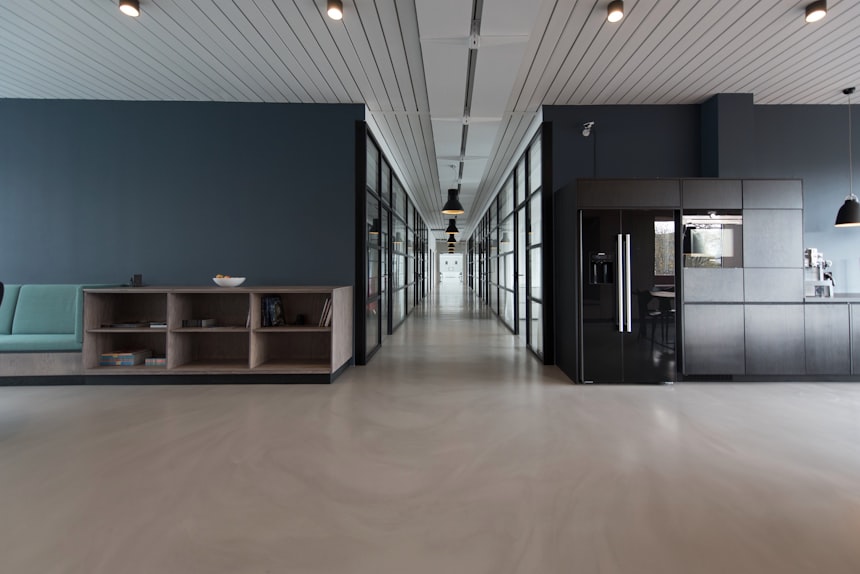
It is not about willpower. Willpower is a finite resource, and relying on it to block Twitter is a losing game. What works is designing your environment so that the friction runs in the right direction.
Close the tabs. Turn off the phone. Make the default action the focused one.
Remote work hands you that design problem every single day. Which is either exhausting or the most interesting UX challenge you have ever had, depending on how you look at it.
There is a particular kind of quiet that settles in around 9am when you work from home. No commute, no background chatter, just the sound of coffee brewing and whatever problem you left half-solved the night before.
It took me about six months to stop feeling guilty about it.
Offices give you a transition. The commute — even a short one — is a bridge between home-brain and work-brain. Without it, mornings can blur. You eat breakfast and suddenly you are already behind on a pull request.
What helps is building a fake transition. A short walk, a specific playlist, a cup of tea you only make on work mornings. The ritual does not need to make logical sense. It just needs to signal to your brain that the context has shifted.
Remote work does something unexpected to deep work: it can make it longer.
When no one walks up to your desk, when Slack is muted and your status is set to "Do Not Disturb," the cost of breaking focus goes up. Interruptions become opt-in. And so you stop opting in as often.
I started tracking focus sessions out of curiosity. Pre-remote: 40–50 minute average before a break. Post-remote, after building some habits: 80–90 minutes. The work is the same. The environment changed.
It is not about willpower. Willpower is a finite resource, and relying on it to block Twitter is a losing game. What works is designing your environment so that the friction runs in the right direction.
Close the tabs. Turn off the phone. Make the default action the focused one.
Remote work hands you that design problem every single day. Which is either exhausting or the most interesting UX challenge you have ever had, depending on how you look at it.